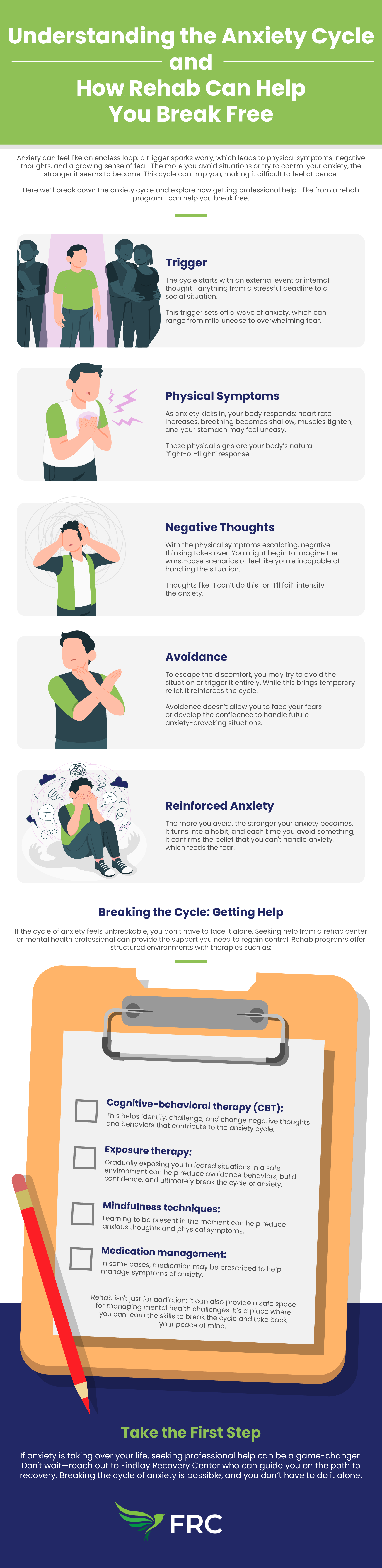
Anxiety can feel like an endless loop: a trigger sparks worry, which leads to physical symptoms, negative thoughts, and a growing sense of fear. The more you avoid situations or try to control your anxiety, the stronger it seems to become. This cycle can trap you, making it difficult to feel at peace.
Here we’ll break down the anxiety cycle and explore how getting professional help—like from a rehab program—can help you break free.
Trigger
- The cycle starts with an external event or internal thought—anything from a stressful deadline to a social situation. This trigger sets off a wave of anxiety, which can range from mild unease to overwhelming fear.
Physical Symptoms
- As anxiety kicks in, your body responds: heart rate increases, breathing becomes shallow, muscles tighten, and your stomach may feel uneasy. These physical signs are your body’s natural “fight-or-flight” response.
Negative Thoughts
- With the physical symptoms escalating, negative thinking takes over. You might begin to imagine the worst-case scenarios or feel like you’re incapable of handling the situation. Thoughts like “I can’t do this” or “I’ll fail” intensify the anxiety.
Avoidance
- To escape the discomfort, you may try to avoid the situation or trigger it entirely. While this brings temporary relief, it reinforces the cycle. Avoidance doesn’t allow you to face your fears or develop the confidence to handle future anxiety-provoking situations.
Reinforced Anxiety
- The more you avoid, the stronger your anxiety becomes. It turns into a habit, and each time you avoid something, it confirms the belief that you can’t handle anxiety, which feeds the fear.
Breaking the Cycle: Getting Help
If the cycle of anxiety feels unbreakable, you don’t have to face it alone. Seeking help from a rehab center or mental health professional can provide the support you need to regain control. Rehab programs offer structured environments with therapies such as:
- Cognitive-behavioral therapy (CBT): This helps identify, challenge, and change negative thoughts and behaviors that contribute to the anxiety cycle.
- Exposure therapy: Gradually exposing you to feared situations in a safe environment can help reduce avoidance behaviors, build confidence, and ultimately break the cycle of anxiety.
- Mindfulness techniques: Learning to be present in the moment can help reduce anxious thoughts and physical symptoms.
- Medication management: In some cases, medication may be prescribed to help manage symptoms of anxiety.
Rehab isn’t just for addiction; it can also provide a safe space for managing mental health challenges. It’s a place where you can learn the skills to break the cycle and take back your peace of mind.
Take the First Step
If anxiety is taking over your life, seeking professional help can be a game-changer. Don’t wait—reach out to Findlay Recovery Center who can guide you on the path to recovery. Breaking the cycle of anxiety is possible, and you don’t have to do it alone.